
-1.webp?width=48&height=48&name=Untitled%20design%20(1)-1.webp)
.svg)
Our goal was $6,000, but we raised $9,464.34. The secret was not a revolutionary ad or a mailing list ten thousand names deep. It was about cultivating an experience that made our audience feel included by sharing real, authentic stories.
During my marketing internship with the Peel Compton Foundation in the summer of 2025, I led a one-day fundraiser tied to International Ride MTB Day. The money went directly to Coler Mountain Bike Preserve in Bentonville, Arkansas. Coler is a world-class trail system that relies on donations for trail maintenance, rider education, and community programming. Here is a full breakdown of the strategies and results that led us to $9,464.34.
Before any strategizing, I spent the first few weeks of my internship researching. I studied what makes donors give to outdoor nonprofits, and three themes kept surfacing across benchmarks and case studies: authentic storytelling, diversity and inclusion in outdoor spaces, and user-generated content. An important learning curve was understanding that nonprofits that diversify their content formats and lean into supporter-generated storytelling consistently outperform those that lead with direct asks.
Those three themes became the spine of everything we produced. Every post, every interview, and every call to action had to tie back to the campaign theme we landed on: "Why We Ride."
"Why We Ride" worked because it wasn't a pitch. It was a statement that invited riders, volunteers, and Coler families to answer in their own voices. That single creative decision made every subsequent asset easier to produce, because the team was not writing copy. We were collecting and amplifying community voices.
One strategic decision defined the entire campaign: we intentionally held the donation link for three days. No "donate now" buttons on day one. No fundraising thermometer. Just stories from the people who love Coler.
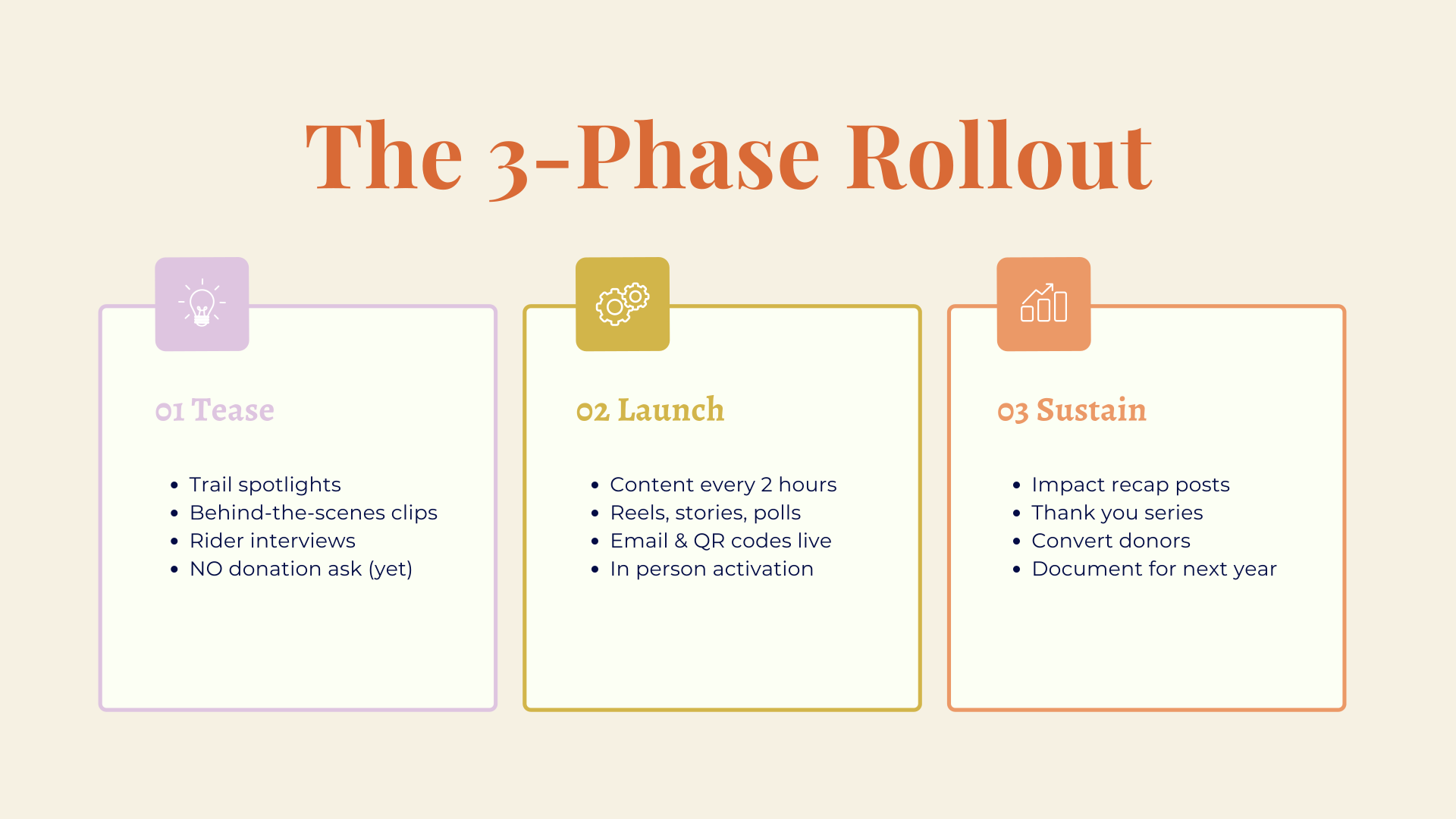
From July 15 through July 17, every piece of content focused on emotional connection. Trail spotlights, behind-the-scenes clips, and personal rider interviews rolled out daily. Our audience learned about the place and the people before they were asked to give anything. The payoff: by the time the donation link went live, viewers already felt invested.
On launch day, the pace shifted. New content dropped every two hours across Instagram Reels, stories, polls, and email. Every post pointed back to a single donation page. QR codes were placed at coffee shops, trailheads, and all across Bentonville. That day alone brought in $6,775, more than the entire original goal.
A campaign does not end when the clock strikes midnight. On July 21 we shifted to an impact recap series and personalized thank-you content. These were designed to convert one-time donors into recurring supporters. That pipeline work is what turns a one-day spike into a sustainable revenue channel for the organization.
Real stories, told by real people, did the heavy lifting. I produced several "Why We Ride" interviews, some professionally filmed and others captured on an iPhone at the trailhead. The professional videos were posted to YouTube, while short cuts and more casual interviews were repurposed as Reels and story content throughout the week. The #WhyWeRide hashtag gave the community a frame to share their own stories, and the organic user-generated content that came back extended our reach far beyond our own follower count.
The other accelerator was Airship Coffee, a local coffee shop operated at Coler. They contributed a $1,000 donation match plus $1,500 in in-kind giveaways. This incentive triggered early donations, established credibility, and tied our online campaign directly to a physical community space where riders already spent time.
The numbers tell the story, and they tell it loudly
.svg)
More insights include:
- $9,464.34 raised against a $6,000 goal
- 38 total donors, 73.7% of them first-time donors to Coler
- $6,775 raised on July 20 alone
- 38,651 Instagram views and 992 interactions
- 901 accounts reached organically
- Table tents drove 58.5% of all QR code scans, validating the offline-to-online strategy
The first-time donor share matters most for the long-term pipeline. Nearly three out of four donors had never given to Coler before. This meant the campaign did not just hit a number, it meaningfully expanded the organization's future fundraising base.
No campaign is perfect, and this one exposed a few sharp lessons worth passing on. Long-form interview videos underperformed relative to shorter, punchier Reels. Going forward, every long interview should be cut into three to five short clips before anything else launches. Influencer drop-off in the middle of the week also hurt; next time, commitments need to be signed well in advance with clear deliverable dates. And a small paid boost budget, even $200 or $300, could have meaningfully extended the organic reach we were already generating.
If you are building your next nonprofit campaign, steal these four plays:
- Lead with story, not the ask. Your audience needs to feel connected before they open their wallet.
- Hold the donation link for a few days. Delay creates urgency and signals that the campaign is about community, not conversion.
- Invest in user-generated content. It extends your reach in ways branded content simply cannot.
- Lock in a local matching partner early. A matching gift offer is one of the most effective tools to drive early donations and build credibility.
For a deeper look at some of the creative assets I used for the campaign, see the full case study in my portfolio.
The "Why We Ride" campaign was one of the most meaningful projects I have worked on, and it reinforced exactly why I am passionate about nonprofit marketing. When strategy meets storytelling, real impact follows, and I would love to help your organization build that same kind of momentum.